

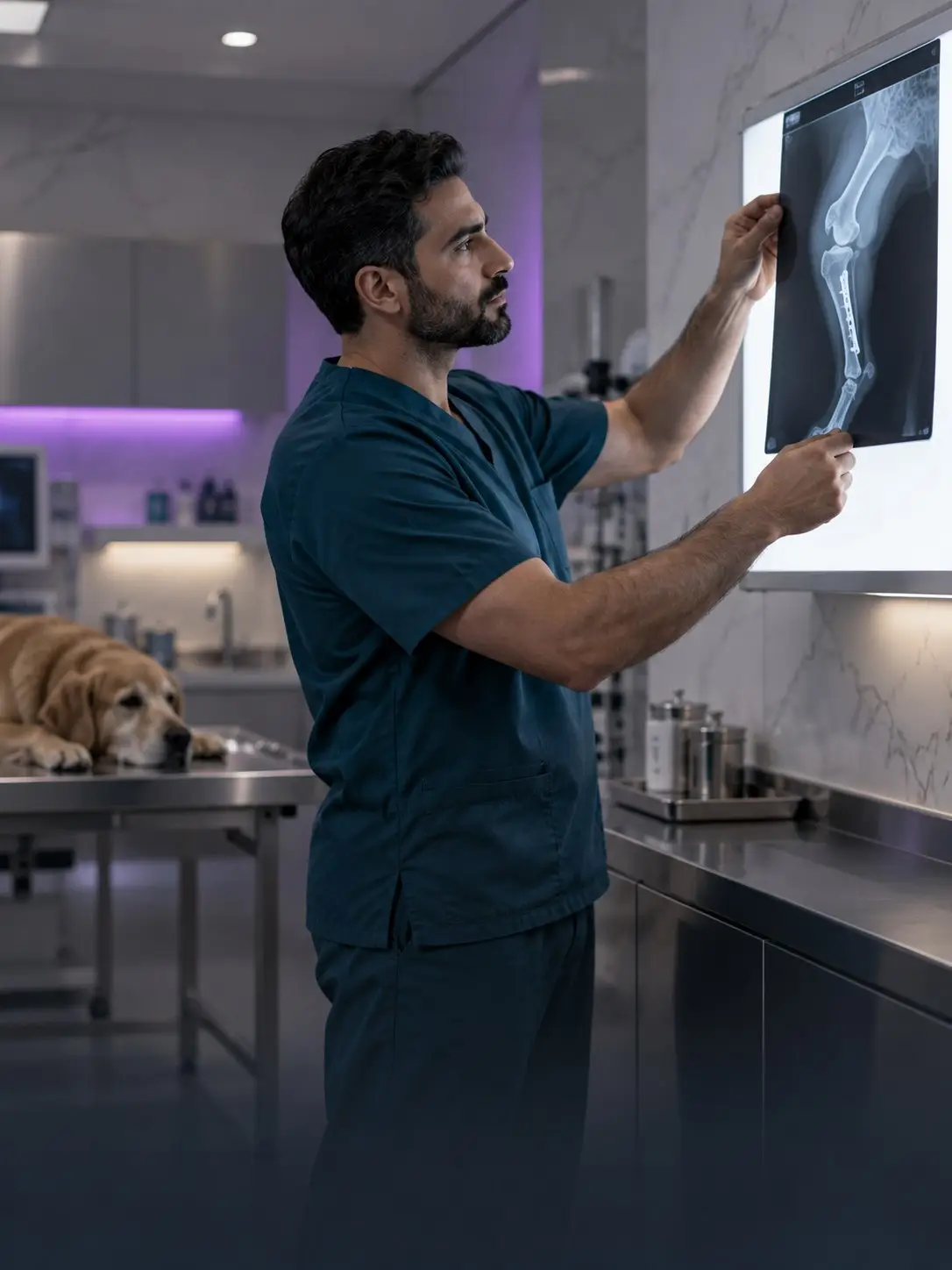
A limp needs an x-ray the same day if your dog or cat will not put the foot down at all, if the leg looks bent or swollen, or if there was a fall or a road accident. A mild limp in an animal that still uses the leg and eats normally can be rested for 24 hours first.
The decision rests on three things you can check at home in two minutes. They are how much weight the leg takes, what the leg looks like, and what happened before the limp began.
Come in today
- The foot is held off the ground completely, or only the toe tips touch.
- The leg hangs, swings, or bends where there is no joint.
- Swelling that appeared within hours, or a joint that is hot to touch.
- Any fall from a balcony, window or stairwell, and any collision with a car or bicycle.
- A wound, bleeding, or bone visible.
- Crying out when the leg is touched, or a normally gentle animal snapping.
- Dragging one or both back legs, or knuckling over on the paw.
One cat emergency belongs on this list. A cat who suddenly cannot use one or both back legs and is crying may have a blood clot blocking the arteries to the legs. The paws feel cold and the pads look pale or bluish. It is a circulation emergency, not an orthopaedic one. Call the emergency line and leave immediately.
What can wait 24 hours
A limp is mild when your dog still walks on the leg, the limp is no worse after an hour, and nothing looks swollen or out of shape. He eats, greets you and settles to sleep.
Rest him for a day. That means lead-only toilet trips, no stairs, no sofa and no ball. Keep a cat in one room without climbing furniture. If the limp has gone by the next day, keep things quiet for two more days and then return to normal.
See the vet if the limp is still present after 24 to 48 hours, even if it is slight. Also come in if it returns each time exercise resumes, or if it is worse first thing in the morning.
Do not give any painkiller from your own cabinet. Paracetamol can kill a cat, and ibuprofen damages the stomach and kidneys of dogs. Painkillers also mask the signs the vet needs to find.
Check the paw before anything else
A large share of limps start in the foot. With your dog lying down, look at each pad, spread the toes, and check every nail.
- A torn or split nail, which bleeds heavily and is very sore.
- A cut pad, or a thorn, glass chip or stone wedged between the toes.
- A swollen toe, or a red moist lump between the toes.
- Chewing gum, tar or dried mud matted into the fur under the foot.
Burnt pads or a bone injury
From May to October, pavement, sand and artificial turf in Dubai get hot enough to burn pads within a few minutes. A burnt foot and a sprained leg both cause limping, but they look different.
| Sign | Pad burn | Bone, joint or ligament injury |
|---|---|---|
| Legs affected | Usually several feet, often all four | Usually one leg |
| Onset | During or right after a daytime walk | After a jump, slip, fall or rough play |
| How the dog moves | Short careful steps, reluctant to walk at all | Walks readily but spares one leg |
| The pads | Red, darker than usual, blistered, or with loose flaps of skin | Normal |
| Licking | Constant licking of the feet | Licks a joint or not at all |
Burnt pads need a vet visit for pain relief and dressings, but not an x-ray. Rinse the feet with cool tap water, do not apply ice or creams, and carry your dog to the car.
Balcony and window falls
Every fall from height is a same-day visit, including the cat who lands, shakes herself and walks inside. Falls from towers are a regular reason for emergency visits in Dubai, mostly through open windows or from balcony rails and ledges. The injuries that kill are not in the legs.
A falling cat spreads her legs and lands chest-first. Bruised lungs, air leaking around the lungs, a split palate and a broken jaw are common. They can take hours to show. A limp may be the only thing you notice at first.
The vet listens to the chest and takes chest x-rays before focusing on any leg. Carry her in a box or carrier, keep her flat, and do not offer food. Small dogs that slip through balcony railings are handled the same way.
What the x-ray adds, and what it misses
Before any picture is taken, the vet watches your dog walk and then feels the leg from toes to spine. Each joint is flexed, extended and checked for swelling. That examination decides which area to x-ray. Two views at right angles are standard. The opposite leg is sometimes imaged for comparison, especially in young animals with open growth plates.
X-rays show fractures, dislocations, bone infection, arthritis and bone tumours. They show growth plate injuries in puppies and kittens, which need prompt attention. Poor hip and elbow shape in young large-breed dogs is also diagnosed on x-ray.
They do not show ligaments, tendons or muscle. A torn cruciate ligament in the knee is diagnosed by the vet's hands. The x-ray adds supporting signs, such as fluid in the knee, and helps plan surgery. Hairline cracks can be invisible on day one and clearer a week later.
Most limb x-rays are taken under short sedation. A painful leg has to be held straight and still, and that is not fair to ask of an awake animal. Bring your dog or cat fasted if you can.
If a fracture is found, the options are set out on our page on fracture repair. You receive a written estimate before any procedure.
Tile floors and repeat limps
Indoor dogs in Dubai spend the day on polished tile. Older dogs with arthritis and small breeds with loose kneecaps slip on it repeatedly. The pattern is a limp that comes and goes. A Pomeranian, Chihuahua or toy poodle may skip for a few steps on a back leg and then walk normally again.
That history is worth an examination even when the dog looks sound on the day. Film the limp on your phone at home. A dog in a consulting room often walks perfectly. Our orthopaedic service sees these cases by appointment.
When to call
Call 055 620 4085 now for a leg that takes no weight, any fall from height, a visible deformity, or a cat with sudden back leg weakness. The phone is answered 24 hours, and the clinic is open 8 AM to 12 AM every day.
Tell the nurse what happened and when your pet last ate. Keep him confined and carry him to the car. For a mild limp that has lasted more than a day, book a consultation and bring your video.