

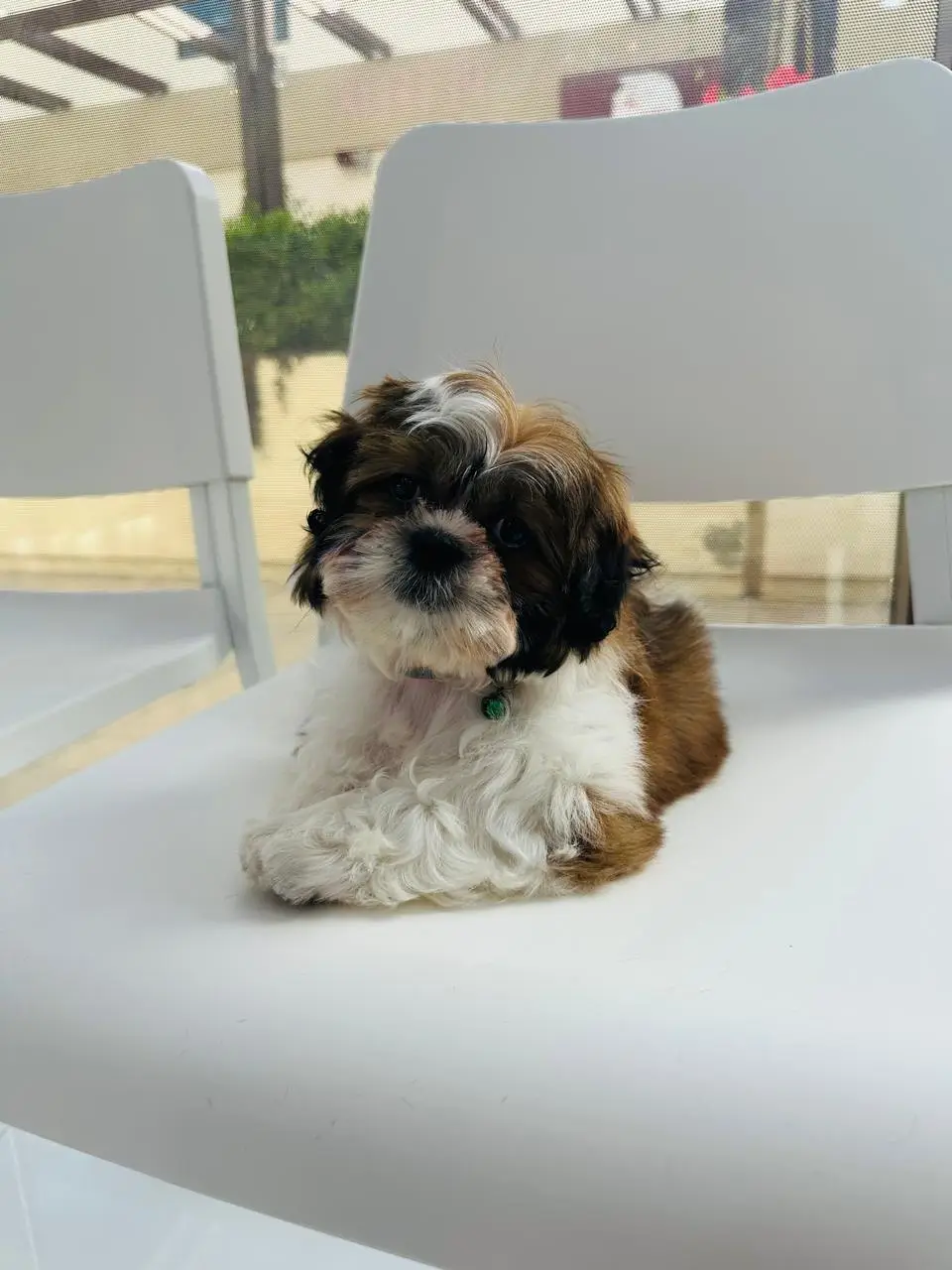
Cherry eye is the tear gland of the third eyelid slipping out of place. It shows as a firm pink lump in the inner corner of the eye, on the nose side. In a bulldog or a shih tzu under 2 years old it almost always needs surgery, and the gland is put back rather than cut out.
It rarely settles on its own. The real question is how soon, and whether the other eye is next.
What the lump is
Your dog has a third eyelid in the inner corner of each eye. A tear gland sits at its base. That gland makes roughly a third of the watery part of the tear film, and a small ligament holds it down.
In some dogs the ligament is weak from birth. The gland flips up over the edge of the third eyelid and sits on the surface of the eye. Air dries it, it swells, and the swelling makes it harder to slip back.
The lump is not a tumour and not an abscess. It is normal tissue in the wrong place. It does not blind your dog. What it does is rub, and it stops the gland working properly.
Which dogs get it
Most cases are young. The usual window is 6 weeks to 2 years, and many owners here notice it in the first month after a puppy arrives home.
- English and French bulldogs.
- Shih tzu, Lhasa apso and pug.
- Beagle and cocker spaniel.
- Cane corso, neapolitan mastiff and other large loose-faced breeds.
Cats get it far less often. When they do, it is usually a Burmese or a Persian.
One eye goes first. The second follows in a large share of dogs, often within months, because the same weak ligament sits on both sides. Ask about that at the first consultation so the second one does not come as a surprise.
Why waiting rarely works
A fresh cherry eye sometimes tucks itself back in for a day or two. It comes out again. Each time it is out, the gland dries a little more and swells a little more.
Three things follow if it stays out for weeks.
- The gland stays enlarged and stops draining tears the way it should.
- The eye develops a red, sticky conjunctivitis.
- Your dog rubs on the sofa, the carpet or his own paw and scratches the cornea.
The scratched cornea is the painful part. It turns a planned morning list into an urgent visit. Surgery is also easier while the gland is still soft and small, because there is more third eyelid left to work with.
Come in the same day if
- The eye is held shut, or he is blinking hard on one side.
- The cornea looks cloudy, bluish, or has a dull patch on it.
- There is green or yellow discharge.
- He is rubbing the eye on furniture or with a paw.
- The lump appeared suddenly with obvious pain in a dog over 5 years old.
Do not push the gland back with your finger. Hands carry bacteria, the tissue tears easily, and it comes straight back out. Do not use leftover eye drops from another animal either. Steroid drops on a scratched cornea make the scratch deeper.
Putting the gland back, not taking it out
Cutting the gland out is the faster operation and it was common years ago. It is the wrong one. Remove the gland and the eye loses a third of its tear production for the rest of your dog’s life.
| Outcome | Gland repositioned | Gland removed |
|---|---|---|
| Tear production | Kept | Permanently reduced |
| Risk of dry eye | Low | High, often appearing years later |
| Long-term medication | None expected | Drops for life, usually twice a day |
| Recurrence | Possible, a second surgery is sometimes needed | None, the gland is gone |
Dry eye looks like thick yellow discharge, a dull cornea and a dog who squints in bright light. It is manageable with drops, and the drops never stop. Flat-faced breeds are already prone to it, which is exactly why the gland goes back in these dogs.
Two repositioning methods are in normal use. One buries the gland in a pocket made in the third eyelid. The other anchors it to deeper tissue with a stitch. The choice depends on how swollen the gland is and how much third eyelid is available. The surgeon tells you which one and why before the day.
Surgery day for a flat-faced dog
This is a planned procedure under general anaesthetic at our Ras Al Khor Industrial 3 clinic, not an emergency. Your dog comes in fasted in the morning and goes home the same evening in most cases.
Flat-faced dogs need extra thought around the anaesthetic. The airway is narrow and they wake up more slowly than a labrador of the same weight. Blood is taken before induction, a tube protects the airway during the procedure, and a nurse stays with him until he is sitting up and swallowing. Recovery happens in an air-conditioned kennel, not in a car in August. Our surgery service page sets out how the day runs, and the consultation, blood test and procedure fees are on the price list.
The two weeks after
- The cone stays on day and night until the recheck. One good rub can undo a stitch.
- Drops go in on the schedule you are given, even when the eye looks better.
- No swimming, no beach, no dusty walks, no sand in the face.
- Use a harness instead of a neck collar.
- Expect redness and some swelling for about a week.
A recheck is booked before you leave. If the gland is going to slip again it usually does so in the first few weeks, and that is easier to fix early. Recurrence is possible with every technique, and a second surgery is sometimes needed.
What else looks like cherry eye
Not every pink lump in the inner corner is this. In a dog over 6 years, a new mass there needs a proper look and sometimes a sample, because tumours of the third eyelid do occur. In cats, a third eyelid that creeps across both eyes with no lump usually points somewhere else entirely, often the gut, and the eye is not the problem to treat.
A swollen inner corner with heavy discharge can also be a blocked tear duct or a grass seed lodged behind the third eyelid. The vet numbs the eye with drops and looks underneath during the consultation. That takes a few minutes and settles which of these you are dealing with.
When to call
Call 055 620 4085 with your dog’s breed, his age and which eye it is. The phone is answered 24 hours, and the clinic is open 8 AM to 12 AM every day. A photo taken in daylight, sent on WhatsApp, is usually enough for the vet to tell you whether this is a today visit or a booking for this week.
If your puppy has not had his first check yet, the eye can be looked at in the same appointment. Book a time and bring the vaccination book you were given by the breeder.