

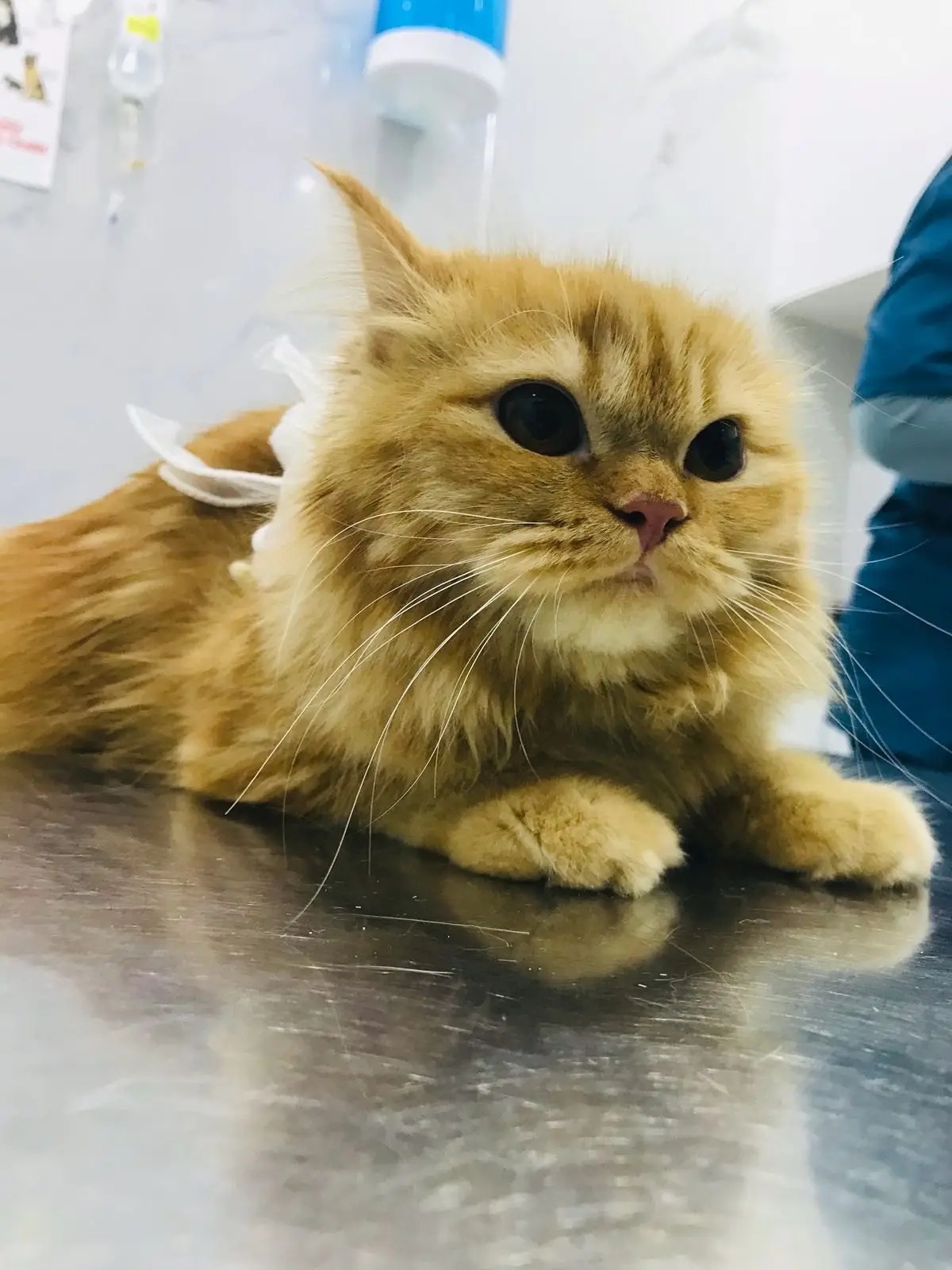
After surgery, keep your dog or cat in one small room, cover the tile floor, and stop all jumping until the vet clears it. For most soft tissue operations that means 10 to 14 days. For bone and joint surgery it means six to eight weeks, sometimes longer.
A flat makes some of this easier, because there is no garden to bolt into. It makes other parts harder. The floors are slippery, the toilet area is a lift ride away, and for half the year the ground outside is hot enough to hurt.
Set up the recovery room before surgery day
Choose the smallest room with a door, or section off a corner with a pen. A bedroom with the bed blocked works. A bathroom works for a cat if it is kept dry and cool.
- Remove or block anything that invites a jump, including sofas, beds, window sills and cat trees.
- Put food, water and a low-sided litter tray within a few steps of the bed.
- Keep the air conditioning steady at a comfortable room temperature. Animals coming out of an anaesthetic lose heat at first, so add a blanket for the first night.
- Keep the balcony door shut. A groggy cat on a balcony rail is a second emergency.
For a dog used to a crate, the crate is the simplest answer. It should be large enough to stand and turn in, with a non-slip mat inside. For a dog who has never seen one, a pen or a small room causes less distress than forcing a crate on the first night.
Tile floors are the main hazard indoors
Polished porcelain and marble give paws no grip. A dog that slips in the first fortnight after knee or hip surgery can undo the repair. A cat skidding off a run can pull abdominal stitches.
- Lay yoga mats, rubber-backed runners or interlocking foam tiles on every route your dog uses. Cover the path from bed to door fully, not in patches.
- Ask the nurse to trim the nails and the fur between the pads before discharge. Both improve grip.
- Carry small dogs over bare floor. For large dogs, use a towel slung under the belly as a support for the first days.
- Keep other pets and children out of the room. Most slips happen during greetings.
Lifts, corridors and the walk to the grass
Toilet trips are on a short lead, every time, even for a dog who never leaves your side. They are for toileting only. Five minutes is enough in the first week unless the vet says otherwise.
Take the lift, never the stairs. If the lift is busy, wait for an empty one. Another dog in a small space is the usual reason a patient leaps or spins. Carry a small dog through the lobby if you can do it without pressing on the wound.
In the hot months, go out before 7 in the morning and after sunset. Test the pavement with the back of your hand for five seconds. If you cannot hold it there, your dog cannot walk on it. A dog with a sore leg moves slowly and cannot hop off hot ground quickly.
Keep the wound dry. Skip watered lawns and puddles from sprinklers. If the building has a dog relief area with artificial grass, stand your dog on the driest part. Wipe the paws and check the dressing when you get back upstairs.
Some owners set up a grass pad on the balcony for the first days. That is reasonable for a small dog if the balcony is shaded, fully enclosed and you stay with him.
Cone alternatives, and when they work
Licking is the most common cause of wound breakdown. Something has to stop it at all hours, including overnight. The plastic cone is the most reliable option, but it is awkward in a narrow corridor and many cats freeze in one.
| Option | Works well for | Watch for |
|---|---|---|
| Plastic cone | Almost any wound, including legs, tail and face | Must extend past the nose. Raise food and water bowls so the rim clears them |
| Recovery suit | Spay and other belly wounds, chest wounds | Does not protect legs or tail. Must stay dry and be unfastened for toileting in dogs |
| Soft fabric cone | Calm cats and small dogs | Folds back if the animal is determined |
| Inflatable collar | Wounds on the upper body | Most dogs can still reach paws, lower legs and tail |
Test any alternative while you are watching. If your dog can touch the wound with his tongue once, he will do it all night. Go back to the plastic cone.
Food, medicine and the wound check
Offer a small meal on the first evening. Appetite is usually back to normal by the next day. Give every medicine exactly as written on the label, and never add a human painkiller. Paracetamol and ibuprofen are dangerous to cats and dogs.
Look at the wound morning and evening in good light. A healing wound is dry, with edges that meet and a little pinkness that fades daily. Take a photo on day one so you have something to compare against.
Bored patients get into trouble. Use a food puzzle, a lick mat or scattered kibble inside the pen. Sit in the room with them. For a young dog on weeks of rest after cruciate ligament surgery, ask the vet about calm exercises you can add at each stage.
When home is not the right place
Some flats cannot be made safe. A large dog on the fourth floor of a walk-up is one example. A home with toddlers or several other animals is another. So is an owner who works 12-hour shifts. In those cases, a few days in our inpatient ward after the operation can be the safer choice.
Raise it before the day of surgery, so the stay and its cost are on the written estimate. Rechecks and stitch removal can be booked on WhatsApp.
When to call
Call 055 620 4085 if you see any of the following. The phone is answered 24 hours, and the clinic is open 8 AM to 12 AM every day.
- The wound is open, bleeding, or leaking anything other than a few clear drops.
- Swelling, heat or redness that is spreading instead of fading.
- No food for 24 hours, repeated vomiting, or no urine for a day.
- After leg surgery, a sudden return to not using the leg, especially after a slip.
- Heavy panting or restlessness that pain medicine does not settle.
Send a photo of the wound on WhatsApp when you call. It helps the nurse decide whether you should come in now or at the next recheck.