

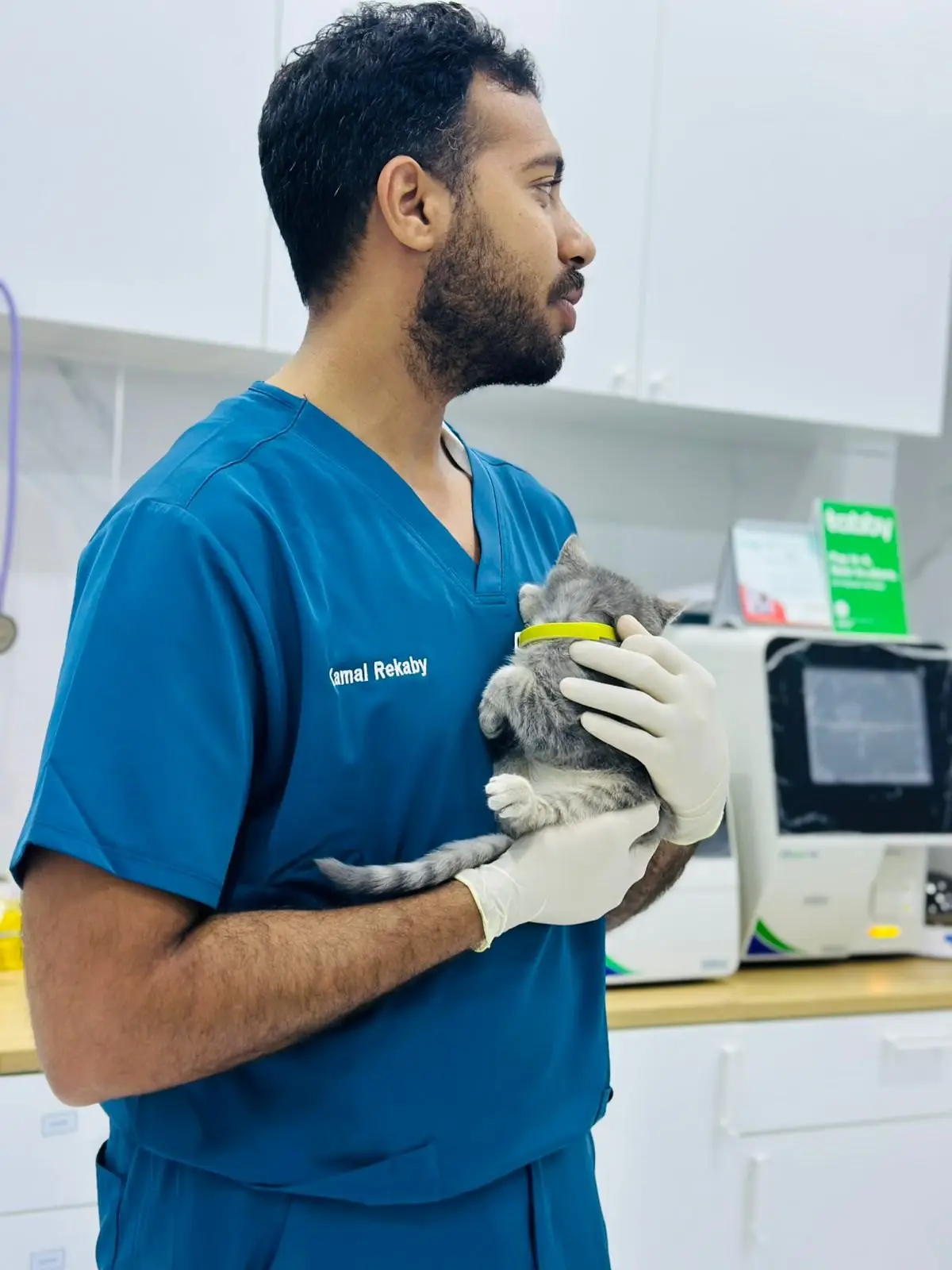
An in-house veterinary lab can run a full blood count, organ biochemistry, a urine test, basic cytology and most rapid infection tests during the same visit. Biopsies, bacterial cultures and most hormone tests go to an outside laboratory and take several days.
The difference decides whether your cat or dog leaves with a diagnosis or with a follow-up call to wait for. Below is what falls on each side of that line, and why.
Tests that run while you wait
Haematology
A haematology analyser counts red cells, white cells and platelets from a few drops of blood. It answers three questions fast. Is the animal anaemic, is there infection or inflammation, and can the blood clot. The machine takes a few minutes.
When a count looks wrong, a blood smear is stained and checked under the microscope. That confirms low platelets and can reveal abnormal cells.
Biochemistry and electrolytes
The biochemistry analyser measures kidney values, liver enzymes, proteins, glucose and often electrolytes. A standard panel is ready in well under half an hour. It is the test behind most decisions about vomiting, poor appetite, heavy drinking, collapse and fitness for an anaesthetic.
Urinalysis
Urine gets three checks. A dipstick reads sugar, blood, protein and acidity. A refractometer measures concentration. A spun sample goes under the microscope for crystals, cells and bacteria. Together they take about 15 minutes. For a cat with kidney concerns or a dog with accidents in the flat, urine often says more than blood.
Cytology
Cytology means looking at cells on a slide. The vet takes a swab from an ear, presses tape to the skin, or draws cells from a lump with a fine needle. The slide is stained and read in minutes.
It separates yeast from bacteria in an ear. It can tell a fatty lump or a cyst from something that needs removal. It does not replace a biopsy where cancer is suspected.
Faecal checks
A fresh stool sample can be examined directly and after flotation for worm eggs and some single-celled parasites. Bring a sample from the same day in a sealed bag.
Rapid tests
These are small cassettes that work on a drop of blood or a swab and read in about 10 minutes.
- Parvovirus in puppies and the related panleukopenia virus in kittens.
- FIV and FeLV in cats.
- Giardia from a stool sample.
- Common tick-borne infections in dogs.
- Blood glucose, from a handheld meter in seconds.
A rapid test is a screening tool. A positive usually stands. A negative in an animal that looks ill may be followed by a PCR test.
PCR
PCR detects the genetic material of a virus, a bacterium or a parasite. It finds infections that rapid tests miss, including early cases and low-level carriers.
We offer PCR testing for cats and dogs from a swab, a blood sample or a stool sample. A PCR run takes longer than a cassette test, so ask at the visit when the result will be ready.
Tests that go to an outside laboratory
| Test | Why it cannot be rushed | Typical wait |
|---|---|---|
| Histopathology, meaning a biopsy or removed lump | Tissue is fixed, processed, sliced and read by a pathologist | Several days to two weeks |
| Bacterial culture and antibiotic sensitivity | Bacteria have to grow before they can be identified and tested | Several days |
| Most hormone tests, such as thyroid and adrenal | Specialised analysers, and some tests need timed samples | A few days |
| Specialist review of cytology slides | Read by a clinical pathologist | A few days |
| Bladder stone analysis | Done by dedicated stone laboratories | One to several weeks |
| Genetic tests | Specialist laboratories, often abroad | Weeks |
When a sample goes out, you are told where it is going, roughly when to expect the result, and how you will hear. Treatment for pain, nausea or dehydration starts the same day. Decisions that depend on the result, such as which antibiotic to use long term, wait for it.
Why same-visit results matter here
The second trip is harder in Dubai
From May to October, every extra trip means a hot car park and a stressed animal. For a flat-faced dog or an elderly cat that is a real cost. A result during the visit means one trip, one period of fasting and one blood draw.
Puppies that fall ill days after purchase
Many puppies here are bought or imported young, with uncertain vaccination records. Vomiting and bloody diarrhoea in the first fortnight raises the question of parvovirus. The rapid test and a white cell count answer it before the puppy leaves the building. That decides whether he is admitted to isolation or goes home.
Rescued community cats
People in Dubai regularly take in street cats. An FIV and FeLV test at the first visit shows whether the newcomer can mix with the cats already in the flat. Kittens that test positive when very young may need a retest later, and the vet will explain the timing.
Late evening problems
Much of Dubai's pet care happens after work, and in Ramadan after iftar. External laboratories collect on their own schedule. An in-house lab works whenever the clinic does, which for us is 8 AM to 12 AM every day.
How to get a useful sample
- Ask whether to fast. Eight hours without food gives the cleanest blood sample. Water is always allowed.
- Do not fast puppies, kittens or diabetic animals unless the vet tells you to.
- For urine from a dog, catch a morning sample in a clean, dry container and bring it within two hours.
- For cats, the vet can take urine directly from the bladder with a fine needle. It is quick and gives a sterile sample.
- Bring every previous report you have. A change from last year says more than one number.
- Keep the car cool and come straight in. A panting, overheated animal gives altered results.
Cost and paperwork
Tests are chosen after the examination, not before it. You receive a written estimate listing each test, and you can ask which ones are essential today and which could wait. Current fees are on the price list. Results are explained in the room. Ask for a copy for your records or for another vet.
The full list of what our in-house laboratory runs is on its own page.
When to call
Call 055 620 4085 if your cat or dog has vomited several times in a day, has bloody diarrhoea, has stopped eating for 24 hours, is drinking far more than usual, or seems weak or pale. These are the cases where same-day blood work changes what happens next.
The phone is answered 24 hours, and the clinic is open 8 AM to 12 AM every day. Tell the nurse when your pet last ate so the sample can be planned.