

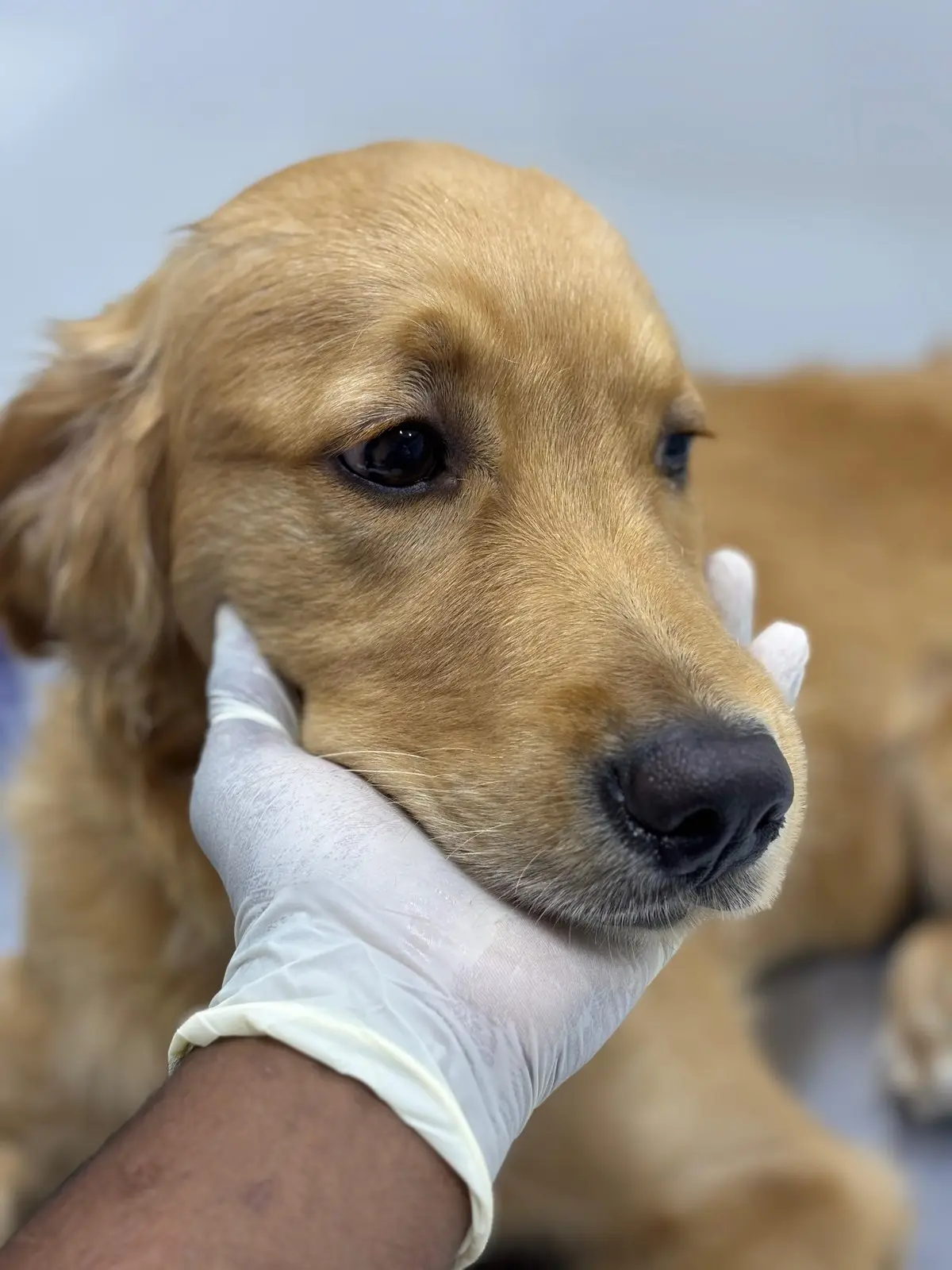
The main signs of pancreatitis in dogs are repeated vomiting, a painful belly, refusing food and sudden tiredness, often within a day or two of a fatty meal. A dog who vomits more than twice and will not eat should see a vet the same day. Severe pancreatitis is life-threatening and mild cases get worse without treatment.
Petflix is open 8 AM to 12 AM every day, and the phone, 055 620 4085, is answered 24 hours.
What is the pancreas doing when it goes wrong?
The pancreas sits beside the stomach and the first part of the intestine. It makes digestive enzymes, and it makes insulin. The enzymes are meant to switch on only once they reach the gut.
In pancreatitis they switch on early, inside the gland. The pancreas starts to digest itself. It swells, leaks, and inflames the tissue around it, including the liver, the bile duct and the bowel. In a severe attack the inflammation spreads through the whole body.
Acute pancreatitis comes on suddenly. Chronic pancreatitis smoulders, with on-and-off poor appetite and mild vomiting over months. Repeated attacks can leave a dog diabetic or unable to digest food properly.
What are the signs?
- Vomiting, usually several times, sometimes with yellow bile.
- Refusing food, including favourite treats.
- Belly pain. He tenses when you lift him, or cries when his abdomen is touched.
- The "praying" position, with chest on the floor and hindquarters in the air, which eases pressure on the belly.
- Dullness, weakness and reluctance to walk.
- Diarrhoea, sometimes greasy or with blood, and sometimes fever.
Signs of a severe attack are collapse, pale or yellow gums, a swollen belly, fast breathing and a dog who feels hot or very cold. Those need a vet at once.
None of these signs is unique to pancreatitis. A swallowed object blocking the gut, kidney failure, poisoning and bloat can all look similar at the start. That is why this is not a condition to manage by guesswork at home.
Why does it follow festive meals in Dubai?
A sudden high-fat meal is the trigger vets see most often. The dog's normal diet is moderate in fat, and then one evening he gets a plate of something rich.
In Dubai the pattern follows the calendar. Eid al-Adha brings lamb fat, skin and trimmings. Iftar spreads in Ramadan leave fried samosas, biryani and fatty meat on low tables within reach.
Christmas and New Year add roast skin and gravy. Through the rest of the year it is shawarma trimmings, grilled chicken skin and the fat poured off a mandi tray.
Usually nobody means harm. Guests slip food under the table. Children share. Household staff give leftovers out of kindness. A dog left alone during a gathering raids the kitchen bin. Agree a single house rule before the event, which is that the dog eats only from his own bowl.
These dishes often carry a second danger. Onion and garlic, cooked or raw, damage red blood cells in dogs. Cooked bones from the same plate can lodge in the gut.
Which dogs are more at risk?
- Miniature schnauzers, Yorkshire terriers, cocker spaniels, dachshunds and poodles are over-represented.
- Overweight dogs, which describes many flat-living dogs with short summer walks.
- Middle-aged and older dogs.
- Dogs with diabetes, Cushing's disease, an underactive thyroid or high blood fats.
- Dogs on certain long-term medicines. Your vet will know which.
- Any dog who has had pancreatitis before.
In a fair number of cases no cause is ever found.
How is pancreatitis diagnosed?
There is no single perfect test, so the vet puts three things together.
History and examination
The vet asks what he ate in the last 48 hours, so be honest about the scraps. The exam checks hydration, temperature, gum colour and where the belly hurts.
Blood tests
A pancreas-specific lipase test measures an enzyme that comes only from the pancreas. A rapid version gives a normal or abnormal answer in minutes, and a measured version gives a number.
A general blood panel checks the liver, kidneys, blood sugar, salts and white cells. It shows how sick he is and rules out look-alike diseases. The general panel is run in our in-house laboratory, so the first results arrive during the visit.
Imaging
Abdominal ultrasound can show a swollen pancreas, bright inflamed fat around it and free fluid. It also checks the bile duct and the bowel. An x-ray does not show the pancreas well. Its job is to rule out a blockage or a foreign body, which would need surgery and not medical care.
A normal ultrasound does not fully exclude pancreatitis, especially early on. The vet weighs the signs, the blood test and the scan together.
How is it treated?
There is no drug that switches pancreatitis off. Treatment supports the dog while the gland settles. That means fluids through a drip to correct dehydration, medication to stop vomiting, and proper pain relief, because this condition hurts a great deal.
Feeding has changed. Vets used to starve these dogs for days. Current practice is to get a low-fat food into the dog as soon as the vomiting is controlled, because the gut recovers faster when it is fed.
A mild case may go home the same day with medication and a recheck. A moderate or severe case stays in the inpatient ward, usually for two to five days, and sometimes longer. The vet cannot promise an outcome in a severe attack. Dogs treated early do better.
You get a written estimate before admission, and consultation and test fees are on the price page.
Do not give human painkillers or anti-sickness tablets at home. Several are toxic to dogs and others mask signs the vet needs to see.
What should he eat afterwards?
Diet is the main tool for preventing the next attack.
- A low-fat, highly digestible diet, usually a veterinary prescription food, for at least the first weeks. Some dogs stay on it for life.
- Three or four small meals a day at first.
- No table food, no fatty treats, no bones, no cheese, no leftovers. A single lapse can start a relapse.
- Steady weight loss if he is overweight, at the pace the vet sets.
- Treats from his daily kibble allowance, or plain vegetables such as cucumber or carrot.
Home-cooked low-fat diets are possible but need a recipe balanced by a vet. Chicken and rice alone is not a complete diet past the first few days. A feeding plan sets the food, the amount and the target weight in writing.
When to call
Call 055 620 4085 if your dog vomits more than twice in a day or refuses food for a day. Call if he shows belly pain, above all after rich food. Come in straight away if he is weak, his belly is swollen, or his gums are pale or yellow.
Until 12 AM you can walk in to urgent care at Petflix. After midnight the nurse on the phone will direct you to the nearest open hospital.