

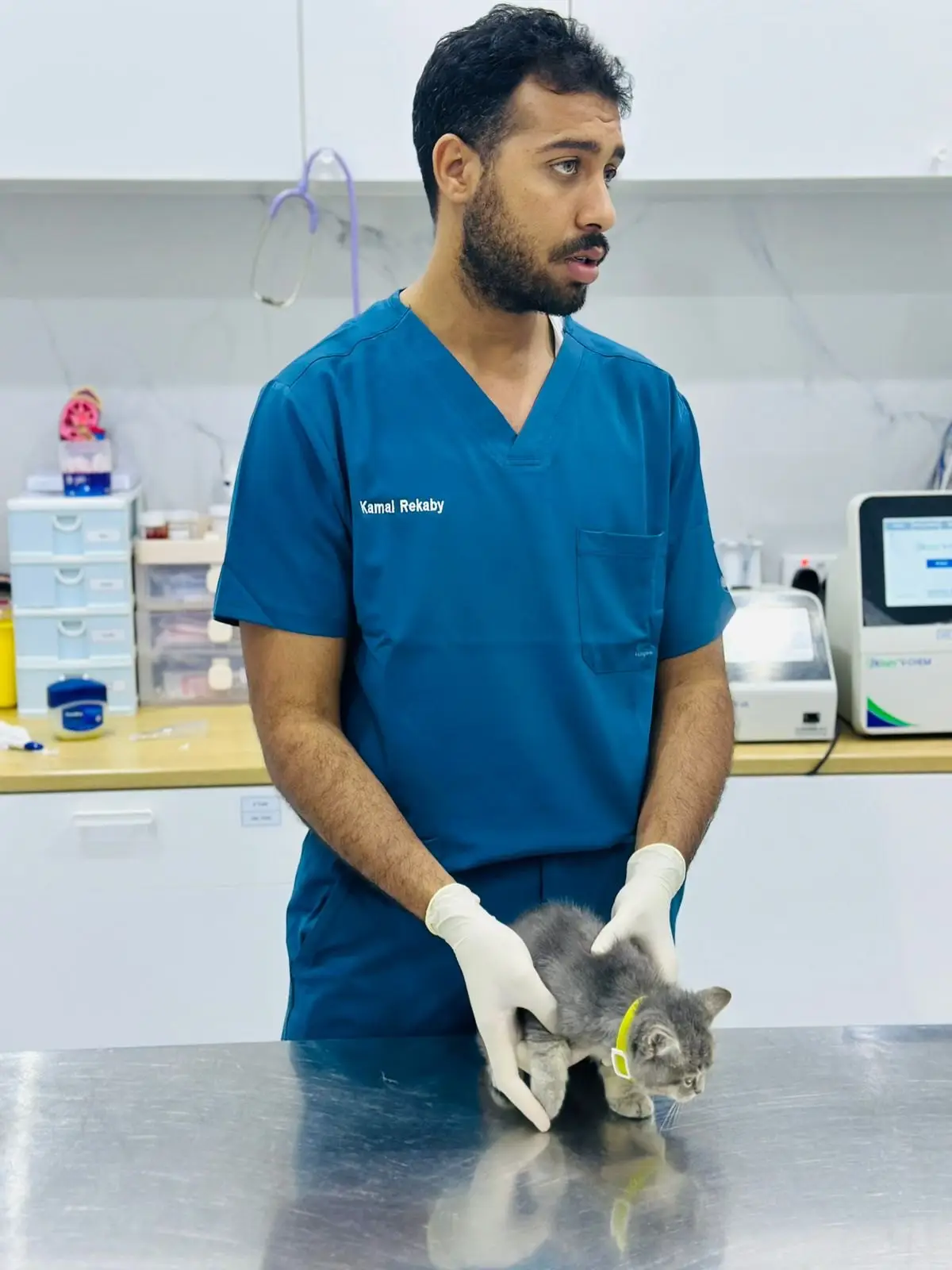
A heart murmur is an extra sound made by blood moving turbulently through the heart. The vet hears it with a stethoscope between the two normal heartbeats. It is a finding, not a diagnosis, and in a puppy or kitten it is often harmless.
What happens next depends on three things. The age of your animal, the grade of the murmur, and whether anything else on the examination is abnormal.
What the grade means
Murmurs are graded 1 to 6. Grade 1 is barely audible in a quiet room. Grade 3 is easy to hear. Grade 5 and 6 can be felt as a buzz through the chest wall with a flat hand.
The grade describes loudness, not damage. A small hole in the heart can make a very loud noise, and a seriously diseased heart can make almost none. This is truer in cats than in dogs, which is why nobody can tell you the outcome from the grade alone.
The vet also notes where on the chest the sound is loudest, whether it happens as the heart squeezes or as it fills, and whether the rhythm and the pulses are normal. Those details narrow the list before any machine is switched on.
Puppies and kittens
Many young animals have a murmur that means nothing. It is usually soft, grade 1 or 2, heard on the left side, and it disappears by about 4 or 5 months of age. Growth, a fast heart rate and a thin chest wall are enough to make the sound on their own.
The plan for a soft murmur in a well puppy or kitten is simple. The vaccine goes ahead if everything else checks out, and the chest is listened to again at the next booster. If the sound has gone by 5 months, it is closed.
A murmur that needs more than listening has one of these alongside it.
- Grade 3 or louder.
- Still present after 5 months of age.
- A puppy or kitten smaller than its littermates, or one that tires on short walks.
- Pale or bluish gums, or fainting after excitement.
- A continuous sound, heard through both halves of the heartbeat.
That last one matters. A continuous murmur in a puppy is the classic sound of a vessel that should have closed at birth and did not. It is one of the few heart problems that can be corrected, and the timing of that decision is measured in months, not years.
Adult dogs and adult cats
In a small-breed dog over 6 years, a new murmur on the left side is most often a leaking mitral valve. Many of these dogs live for years with no treatment and a yearly check. Some need medication, and the scan is what separates the two groups.
In cats the common cause is a thickening of the heart muscle. Cats hide it well. A cat can have a normal heart with a loud murmur, or a diseased heart with no murmur at all, so listening alone is never the answer in a cat.
Two non-cardiac causes get checked first in both species, because they are treatable and quick to rule out. Anaemia makes blood flow noisily, and an overactive thyroid in a cat over 7 speeds the heart and raises blood pressure. Both show on routine blood work from our in-house lab, with results the same visit.
The tests that follow
| Test | What it answers | When it is used |
|---|---|---|
| Blood pressure | Whether high pressure is driving the sound | Cats, and any older animal |
| Blood panel | Anaemia, kidney values, thyroid in older cats | Nearly always, before anything else |
| Chest x-ray | Heart size and fluid in or around the lungs | Coughing, fast breathing, or before anaesthesia |
| Heart ultrasound | Which chamber, which valve, and how severe | The test that actually answers the question |
The heart ultrasound is the one that settles it. It measures the chambers and the walls, shows the direction of the leak, and gives the vet something to compare against next year. It is done awake in most animals, with the chest fur clipped over a small patch on each side. No anaesthetic is needed for the scan itself.
We run digital x-ray and ultrasound in the clinic, and a cardiology specialist is on call for the heart scans, so the appointment happens here in Ras Al Khor rather than at a third address across town. Fees for the consultation, blood work and imaging are listed on the price page.
Why it matters before neutering
A murmur found at the 12-week vaccination is useful information, because the neutering date is usually a few months behind it. Anaesthetic drugs affect the heart, and the dose plan and the fluid rate change once the heart is understood.
A murmur is not a reason to cancel surgery. It is a reason to know what it is first. Most young animals with a soft murmur are anaesthetised on the normal plan. The ones with a real defect get a different plan, and the vet who does the scan writes it down for the surgery team.
Counting breaths at home
There is one number you can collect that the vet cannot collect in a consulting room. Count your animal’s breaths while he is asleep, not panting and not dreaming. Watch the chest rise and count for 30 seconds, then double it.
Under 30 breaths a minute is the usual resting range for a healthy dog or cat. Take the count twice a week and write it in your phone. A steady climb above 30 over days is one of the earliest signs that fluid is building, and it often shows before any cough or any change you would notice by eye.
Bring the numbers to each recheck. A list of dated counts is more useful than a description of how he seemed last week.
When it becomes urgent
- A cat breathing with an open mouth, or breathing fast while lying still.
- Resting breaths over 40 a minute, or rising day on day.
- Gums that are pale, grey or blue.
- Collapse or fainting, particularly after excitement or exercise.
- A cat that suddenly cannot use one or both back legs and is crying out.
- A dog with a cough that keeps him awake at night.
Any of these is a call now, not a booking. Phone 055 620 4085 before you drive. The line is answered 24 hours and the clinic is open 8 AM to 12 AM every day. Carry a cat in a carrier, keep the car cool, and do not offer food on the way in case sedation is needed.
What to do this week
If the murmur was soft and your puppy or kitten is well, keep the booster appointment and ask the vet to listen again. If it was grade 3 or louder, or your animal is an adult, book the blood work and the scan together so you get one answer instead of two half answers. Bring the vaccination card and the date the murmur was first heard, and call 055 620 4085 or book a time to arrange it.