

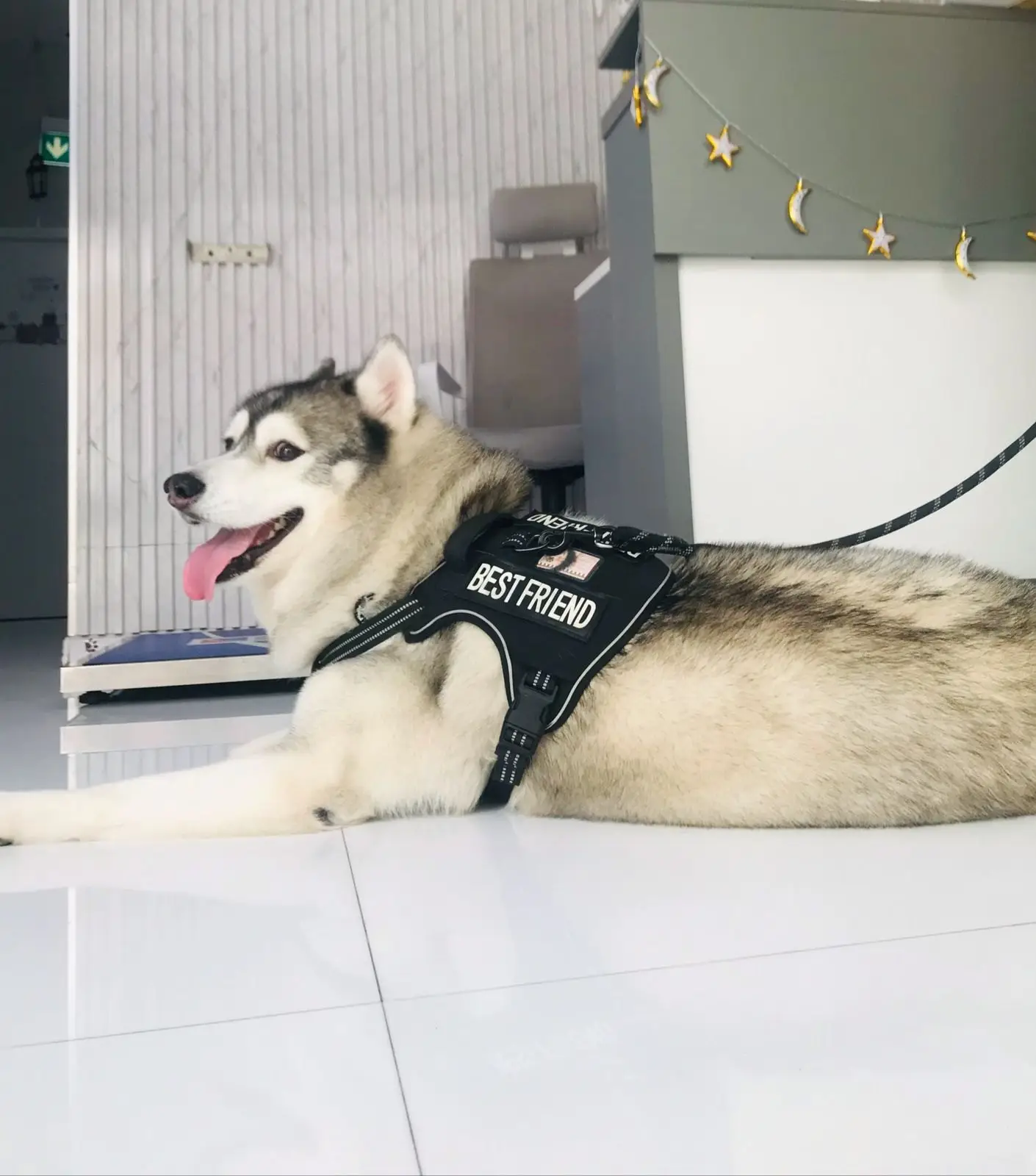
A large dog who retches again and again and brings nothing up, with a belly that looks tight or swollen, needs a vet now. This is the pattern of bloat, known in full as gastric dilatation-volvulus or GDV. The stomach fills with gas and twists, and a dog can die within hours without surgery.
Call 055 620 4085 as you leave. The phone is answered 24 hours and the clinic is open 8 AM to 12 AM every day.
What happens inside the dog
The stomach fills with gas, food and fluid and stretches like a balloon. That stage is dilatation. In many dogs the swollen stomach then rotates on its own axis. That stage is volvulus.
Once it twists, both the way in and the way out are closed. Nothing can come up and nothing can pass on. The gas keeps building. The stomach presses on the large veins that return blood to the heart, and the dog goes into shock.
The twist also cuts the blood supply to the stomach wall and often to the spleen. Tissue starts to die. This is why the clock matters more here than in almost any other condition we see in dogs.
Which dogs are at risk?
Size and chest shape matter most. Dogs with a deep, narrow chest have room for the stomach to swing.
- Great Danes carry the highest risk of any breed.
- German shepherds, Dobermans, Weimaraners, standard poodles, Saint Bernards and Irish setters follow.
- Huskies, Rottweilers, Labradors and golden retrievers are affected less often, but they are not exempt.
- Risk rises with age. Most cases are in middle-aged and older dogs.
- A parent, brother or sister who has bloated raises the risk.
Habits add to the breed risk. One large meal a day, eating very fast, and a nervous temperament have all been linked to GDV in studies. Raised food bowls were once advised as protection. Later research linked them to more cases in large breeds, so we no longer suggest them.
What are the signs of bloat?
The signs come on fast, usually within an hour or two of a meal, and often late in the evening.
- Retching or trying to vomit with nothing, or only white foam, coming up.
- A belly that looks bigger behind the ribs and feels tight as a drum.
- Restlessness. He paces, cannot lie down, and looks at his flank.
- Heavy drooling.
- Fast, shallow breathing and pale gums.
- Weakness, then collapse.
The swelling is not always obvious. In a heavy-coated husky or a deep-chested shepherd the stomach can sit up under the ribs. Go by the retching. Unproductive retching in a big dog is an emergency until a vet says otherwise.
Why does the Dubai routine raise the risk?
For half the year it is too hot to walk a large dog in daylight. Pavements burn paws and a thick-coated dog overheats in minutes. So the whole day's exercise is pushed into a short window after sunset or before dawn.
That same window is when the household gets home and the dog is fed. A hungry husky empties his bowl in under a minute, drinks a full bowl of water, then goes straight out for a run. A full, heavy stomach and hard exercise together is the pattern vets warn about.
Ramadan shifts the evening later again. Dogs are often fed after iftar and walked near midnight, or walked before suhoor and fed straight after.
How can you lower the risk?
None of these steps removes the risk. Together they reduce it.
- Split the daily ration into two or three meals.
- Keep about an hour of rest before a meal, and one to two hours after it.
- In summer, walk first and feed later. Let him cool down and breathe normally before the bowl goes down.
- Slow a fast eater with a slow-feeder bowl or by scattering the kibble.
- Offer water through the day so he does not drink a whole bowl at once after exercise.
- Feed dogs separately if they compete for food.
For high-risk breeds there is also a preventive operation called gastropexy. The surgeon stitches the stomach to the body wall so it cannot twist. It can be done at the same anaesthetic as neutering. Ask about it at your dog's next visit if you own a Great Dane, a German shepherd or another deep-chested breed.
What should you do in the first minutes?
- Phone the clinic and say "large dog, retching, swollen belly". Those words move you to the front.
- Do not give food, water, or anything to settle the stomach.
- Do not try to make him vomit. He cannot.
- Do not wait to see whether it passes. It does not pass.
- Cool the car first and have a second person sit with him.
If it is after midnight, the nurse on the phone will direct you to the nearest hospital that is open. Go there, not to us.
What happens at the clinic?
The vet checks gums, pulse and the belly, and starts treatment for shock through a drip. An x-ray of the abdomen confirms whether the stomach has twisted. The picture is distinctive and takes a few minutes to get.
The stomach is then decompressed to release the gas. If it has twisted, the dog needs abdominal surgery to turn it back and check the stomach wall and spleen. The surgeon fixes the stomach in place at the same operation so it cannot twist again.
Dogs stay in hospital after GDV surgery, usually for a few days. Heart rhythm problems are common in the first days and need monitoring. Outcome depends heavily on how long the stomach was twisted before surgery. Most dogs treated early survive. The odds fall with every hour of delay.
You get a written estimate before surgery starts. Stabilising the dog does not wait for the paperwork. The consultation and imaging fees are on the price page.
When to call
Call 055 620 4085 the moment a large dog retches without result, even if his belly looks normal. Call if he is restless and drooling after a meal and cannot settle. Urgent care at Petflix in Ras Al Khor takes walk-ins until 12 AM, and the nurse will tell you where to go after that.