


Yes. What makes lilies toxic to cats is a toxin that attacks the kidneys, and a true lily is one of the few plants that can kill a cat from a small exposure. The Merck Veterinary Manual says that while lilies are not toxic to most animals, cats are highly sensitive to poisoning, and that if untreated, lily toxicosis results in acute renal failure.
If she has chewed one, this is a drive now. Call 055 620 4085, answered 24 hours, and we are open 8 AM to 12 AM. After midnight the clinic is closed and the nurse will tell you which hospital is open and nearest.
Are lilies deadly to cats even in small amounts?
A small exposure is enough to matter, which is what separates lilies toxic to cats from the others on any plant list. Merck says the toxin is found throughout the plant, so there is no part of a true lily that is safe, and it describes renal failure in cats two to four days after ingestion.
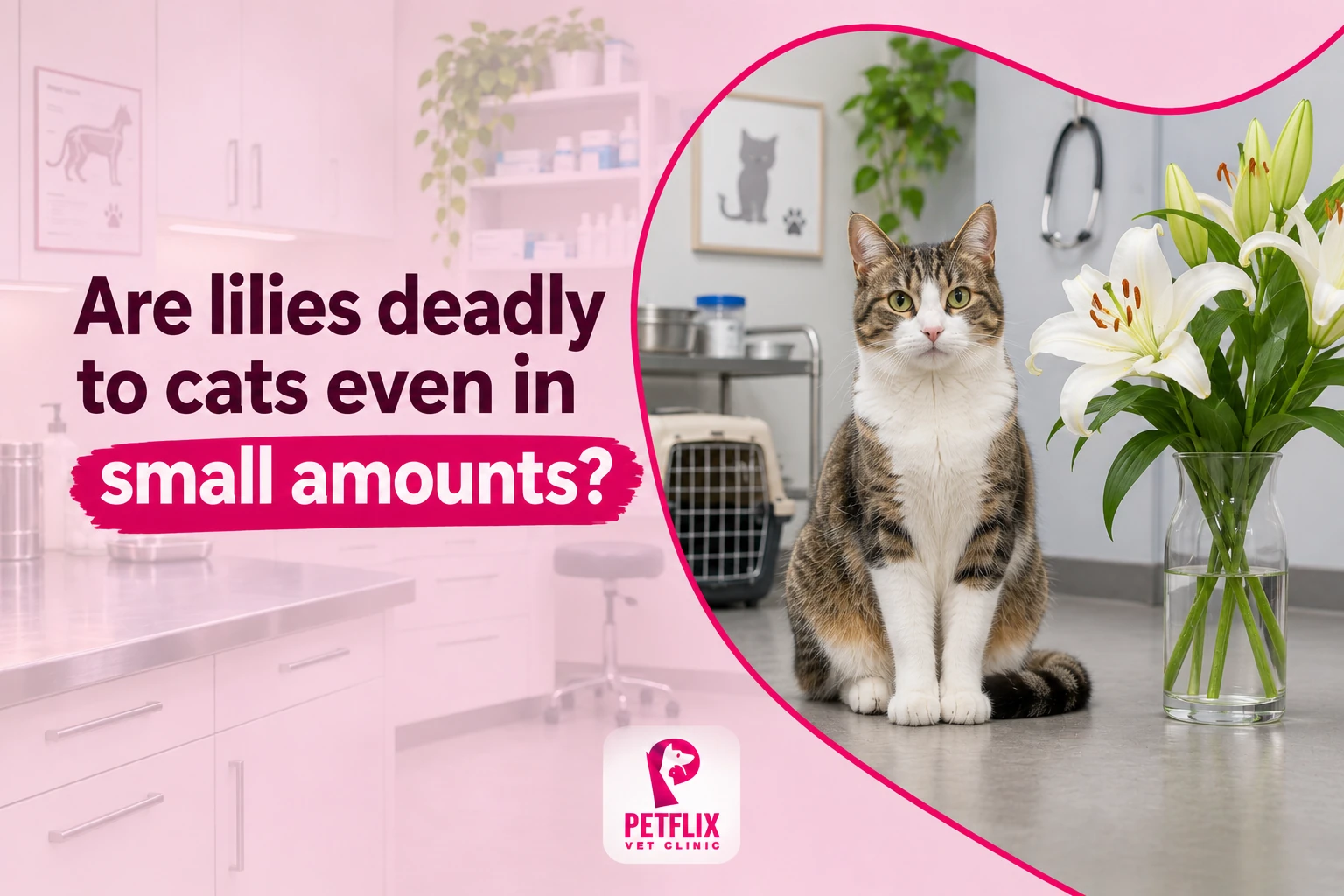
The early signs arrive long before the kidney damage shows. Merck says vomiting, depression and loss of appetite appear within 12 hours of ingestion, and that raised creatinine, urea nitrogen, phosphorus and potassium indicate toxicity.
That gap is the whole danger. A cat who vomits once in the evening and seems settled by midnight has not recovered, and the kidney injury Merck describes is still developing over the next two to four days.
Merck also notes that the lily toxin is not reported to be toxic to other species, so a dog in the same household is a different conversation from the cat.
Which lilies toxic to cats are the true ones?
Only the true lilies are the ones toxic to cats, and the name on the label does not settle it. Merck is specific, saying many plants have lily in the name but are not true lilies and do not pose the same toxicity concerns, and that only lilies within the Lilium and Hemerocallis families are considered true lilies and are toxic.
Lilium covers the ones a florist sells as Asiatic, Oriental, Easter and stargazer lilies. Hemerocallis is the daylily, which is common in planted beds rather than bouquets.
Merck’s own advice for anything uncertain is the practical rule. It says that with any lily exposure the species should be established, because that is what decides whether you are dealing with an upset stomach or a kidney emergency.
Bring the plant, the label or a photograph when you come. Identifying it is the first thing the vet needs and the hardest thing to do from a description over the phone.
Read also: What are the foods dogs cannot eat?
What are the first signs of lily poisoning in cats?
Vomiting and going quiet, within hours rather than days, are the first signs of lilies toxic to cats. Merck puts vomiting, depression and loss of appetite within 12 hours of ingestion, and the kidney signs behind them at two to four days.
- Vomiting, often the first thing an owner sees.
- A cat who goes flat and hides, which Merck describes as depression.
- Refusing food she would normally take.
- Drinking and urinating more, or producing no urine at all as the kidneys fail.
- Pollen on the face, the paws or the coat, which is a reason to act even with no signs yet.
The last one is the one owners dismiss. A cat who has brushed past an arrangement and then groomed herself has swallowed what was on her coat, and that counts as an exposure whether or not you saw her chew anything.
Do not wait for the kidney signs to confirm it. By the time the drinking changes, the window Merck describes has already closed.
What happens at the vet after a lily exposure?
For lilies toxic to cats it is decontamination if she is still well, then bloods and fluids. Merck describes treatment as decontamination of the patient who has no signs yet, and says that if clinical signs are already present, decontamination should only be performed under specific conditions, which is a judgement the vet makes rather than a step to attempt at home.
The blood work is how the kidneys are watched. Merck names creatinine, urea nitrogen, phosphorus and potassium as the values that indicate toxicity, and those run in our in-house laboratory so the first result is back in the visit rather than the next day.
Because Merck’s timeline runs to two to four days, a cat is usually admitted rather than sent home to be watched. Our hospitalisation page covers the ward, and the fees and the daily written quote are on the price list.
Repeat bloods over those days are the point of the stay. Our page on reading cat kidney values explains what the numbers mean and why dehydration moves them.
Which house plants are safe for cats in a Dubai flat?
Safer is a better word than safe, because the plants that are not lilies toxic to cats still cause irritation in Merck’s list. The practical approach in a flat is to remove the true lilies first and then treat every other plant as something she should not be chewing.
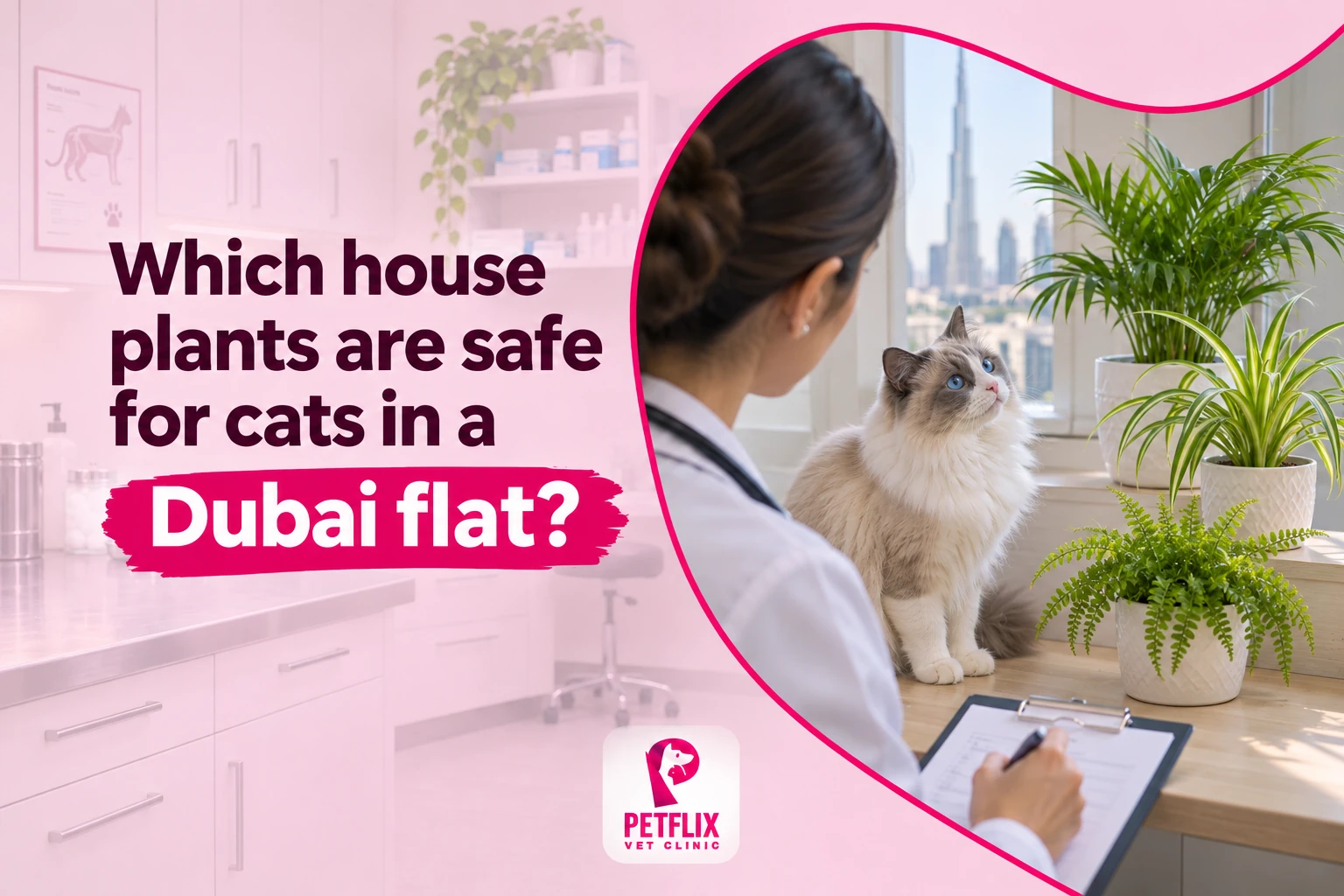
Merck’s entries show the range. For one common houseplant it describes vomiting, salivation, retching and brief loss of appetite in cats within hours of eating it, while adding that deaths and diarrhoea are not reported. For another it describes vomiting and severe diarrhoea from gut irritation. Unpleasant, and a different category from kidney failure.
Our own rules for a flat with a cat are simple and are ours rather than anyone’s guideline.
- No true lilies in the home at all, including a bouquet someone brings as a gift.
- Tell the person sending flowers, because a florist will substitute if asked.
- Keep arrangements off surfaces she uses, and remember a cat uses the high ones.
- Change vase water out of her reach, since the water from an arrangement is part of the exposure.
- Give her something of her own to chew, such as cat grass, so the plants are less interesting.
- Photograph the label of anything new that comes into the flat.
Read also: What if my dog ate rat poison?
Are lilies poisonous to dogs as well?
Not in the same way, because what makes lilies toxic to cats does not act on a dog. Merck says the lily toxin is not reported to be toxic to species other than cats, and that lilies are not toxic to most animals while cats are highly sensitive, so a dog who eats one is not facing the kidney injury a cat faces.
That is not the same as harmless. Plant material can still cause vomiting and diarrhoea in a dog, and Merck’s wider houseplant list covers several species that irritate the gut regardless of which animal eats them.
So the rule splits by species. For a cat a true lily is an emergency, and for a dog it is a call with the plant named, which our page on what dogs cannot eat puts alongside the other household risks.
When should I call the clinic?
Call 055 620 4085 immediately for any of these, and do not wait for her to look ill. Merck’s own treatment framing depends on reaching the cat before signs appear.
- You saw her bite, lick or chew any part of a lily.
- There is pollen on her face, paws or coat.
- She has drunk from the vase water of an arrangement.
- A bouquet in the flat has been disturbed and you cannot rule her out.
- She is vomiting, flat or off her food and there are lilies in the house.
- She is drinking far more than usual, or has produced no urine.
Bring the plant or its label. Do not try to make her vomit at home, because whether that is right depends on the plant and the timing, and the AVMA’s rule is to contact a vet or a poison control centre before inducing vomiting. Our emergency page says what happens when you arrive.
Frequently asked questions
Short answers to what owners search about whether lilies are toxic to cats.
How much lily is toxic to a cat?
Less than owners expect, and no safe amount of the lilies toxic to cats is published. Merck says the toxin is found throughout the plant and that cats are highly sensitive, so the useful answer is that any exposure to a true lily is treated as significant rather than measured.
Is lily pollen dangerous to cats?
Treat it as an exposure. Merck says the toxin is found throughout the plant, and a cat who gets pollen on her coat grooms it off and swallows it, which is why the clinic asks about pollen as well as about chewing.
How long after eating a lily will a cat get sick?
Two stages. Merck puts vomiting, depression and loss of appetite within 12 hours of ingestion, and renal failure at two to four days after it, which is why a cat who settles overnight still needs to be seen.
Can a cat recover from lily poisoning?
The timing decides it. Merck says that untreated, lily toxicosis results in acute renal failure, and its treatment framing is built around reaching the cat before signs appear. That is the argument for calling on the day rather than after the vomiting settles.