

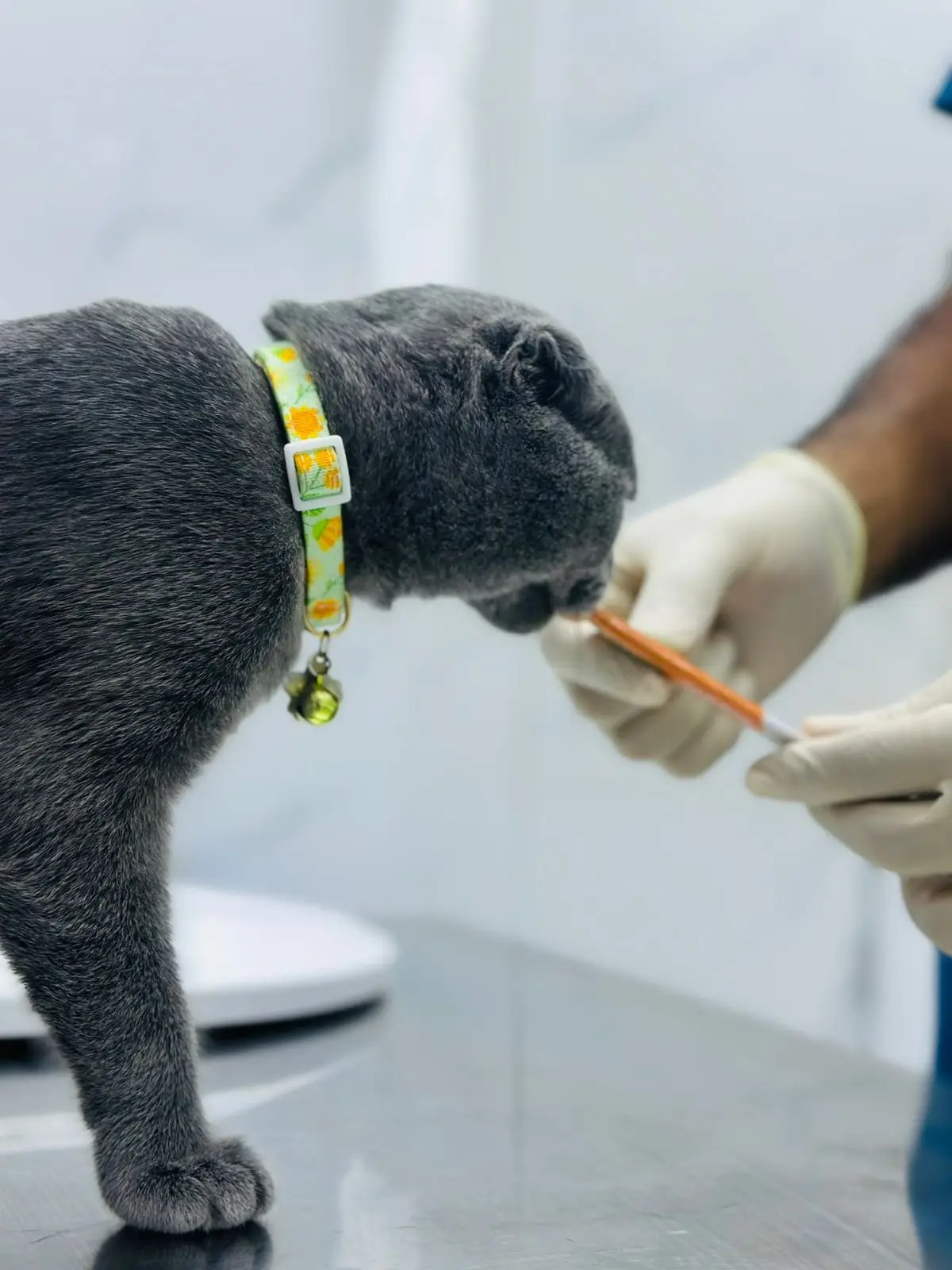
A cat on insulin, on tablets twice a day, or recovering from surgery should board where a vet is in the building, not in a standard cattery or with a neighbour. Medical boarding means her medication is given on schedule by clinic staff and a change in her condition is seen the same day.
Book early for July, August and the Eid holidays, because ward space is limited.
The clinic is open 8 AM to 12 AM every day and the phone, 055 620 4085, is answered 24 hours.
Why is ordinary boarding not enough?
A good cattery feeds, cleans and watches a healthy cat. Most will not inject insulin, and many will not give tablets to a cat who fights. A friend who drops in once a day cannot give a twice-daily medicine twelve hours apart.
Timing is only half of it. A medicated cat can change fast. A diabetic who stops eating, a kidney patient who starts vomiting, or a surgical wound that opens all need a decision within hours. At a clinic the person who notices can walk down the corridor and fetch a vet.
Dubai adds a practical problem. A cat left alone in a flat depends on the air conditioning running for three or four weeks. A power cut or a tripped breaker in August turns a closed flat into an oven, and a sick cat copes worst.
How does it work for a diabetic cat?
A diabetic cat needs insulin injections at regular intervals, tied to her meals. Steady routine is what keeps her stable, and travel season is when routine breaks.
In medical boarding she is fed her own diet at set times. Staff check that she has eaten before each injection, give the dose your vet prescribed, and record it. Her appetite, water intake, litter tray and weight are tracked through the stay. Blood glucose is checked when the vet advises it, in the in-house laboratory.
The main risk in any diabetic cat is blood sugar falling too low. The signs are weakness, wobbliness, twitching and unusual quietness.
This is most likely when a cat gets her insulin and then does not eat, which a change of surroundings can trigger. It is the main reason a diabetic cat should board where someone checks her after every dose and a vet can act.
We do not change your cat's dose or insulin type during a stay without speaking to you, unless it is an emergency. Bring the current prescription so there is no doubt about it.
How does it work for a cat after surgery?
Surgery dates and flight dates often collide. A cat spayed, or operated on for a fracture or bladder stones, may need one to two weeks of restricted movement, a cone or body suit, pain relief and wound checks.
In the ward she is confined to a kennel, which is what most post-operative instructions ask for and what few flats can enforce.
The wound is looked at daily. Medication is given on time. Stitches come out on the day they are due, usually 10 to 14 days after surgery. If the wound swells, leaks or opens, the vet who can deal with it is on site.
Tell us if the operation was done at another clinic. Bring the discharge sheet, so we know what was done and what she has been given.
What should you pack?
- All medication in original boxes with the pharmacy label, and enough for the whole stay plus a few spare days in case a flight is delayed.
- Insulin in a cool bag with an ice pack. Insulin left in a hot car, even for a short stop, may stop working. Bring the matching syringes or pen needles. Syringe types are not interchangeable between insulins.
- Her normal food, enough for the stay. A sudden diet change upsets the gut, and in a diabetic it changes the insulin requirement.
- Vaccination book. Vaccines must be current. If they have lapsed, book the booster at least two weeks before the stay.
- Records. Recent blood results, the glucose log if you keep one, and the discharge sheet after surgery.
- One small item that smells of home, such as a T-shirt or a blanket. Leave valuable beds and toys behind.
The clinic pharmacy can often refill a long-term medicine if you run short. Tell us a week ahead so the item is in stock.
What should you tell the clinic?
A written one-page handover is better than a conversation at the desk while your taxi waits. Include these points.
- Each medicine, the dose as written on the label, the times you give it, and how you get it into her.
- When the last dose of each was given.
- What and how much she eats, and what she does when she is unwell. Some cats hide. Some go loud.
- Whether she can be handled easily, and what upsets her.
- Your contact details abroad, the time difference, and a second person in the UAE who can decide for you if you are in the air.
- A spending limit for treatment we may start if we cannot reach you, and your wishes if something serious happens.
The last point is uncomfortable to write down. It matters most when you are on a long-haul flight with your phone off.
When should you book, and what does it cost?
Book a consultation one to two weeks before you fly. The vet examines her, reviews her medication and confirms she is stable enough to board. It is better to find a problem with two weeks in hand than at drop-off.
The nightly price for a healthy cat is fixed. The price for medical boarding is set after that consultation, because it depends on what has to be given and how often. You get it in writing before you confirm. Standard boarding and isolation ward rates are on the price page.
Ask at drop-off how and when you will get updates during the stay, and agree it before you leave.
When to call
Call or WhatsApp 055 620 4085 as soon as your travel dates are fixed, and say what medication your cat is on. Call earlier if she was diagnosed recently, if her dose has changed in the last month, or if she has surgery planned near your departure. Read how the ward runs on the medical boarding and hospitalisation page.